The Spiritual Reality and History of the Easter Bunny (Osterhase): Truth Behind the Tradition
A Joyful Symbol… or a Hidden Deception?
In the modern world, the Easter Bunny, known in German as Osterhase, appears innocent, joyful, and harmless. Children laugh, families celebrate, and cultures embrace it without question.
But beneath this cheerful symbol lies a deeper and more uncomfortable question:
Is the Easter Bunny just a cultural tradition… or does it carry a hidden spiritual reality rooted in deception?
This article explores the history, symbolism, and spiritual implications of the Easter Bunny from a biblical and reality-based perspective, separating truth from tradition.
The True Meaning of Easter
At its core, Easter is not about animals, sweets, or cultural symbols.
It is about Jesus Christ, His death, burial, and resurrection.
Jesus died for our sins(Romans 5:8)
He was buried and rose again on the third day(1 Corinthians 15:3–4)
His resurrection is the foundation of our salvation and eternal life
Easter, in its purest form, celebrates:
Victory over sin
Victory over death
The power of God’s love
Anything that shifts the focus away from this truth must be carefully examined.
The Origins of the Easter Bunny (Osterhase)
The Easter Bunny did not come from the Bible.
It originated in 17th-century Germany, where folklore described a hare that would lay eggs.
Children prepared nests for the hare
Eggs were left as rewards for “good behavior.”
Disobedient children received nothing
When German immigrants traveled to other parts of the world, this tradition spread and evolved into the global Easter Bunny we see today.
But this raises important questions:
Why a rabbit? Why eggs? And why link this to Easter?
Ancient Roots: Fertility and Symbolism
Historically, these symbols connect to ancient spring festivals that celebrated:
Fertility
Rebirth
Renewal of life
Key Symbols:
Rabbits (Hares): Represented fertility due to rapid reproduction
Eggs: Represented new life and creation
Some traditions associate these with a figure often referred to as Eostre (Ostara), though historical evidence is debated.
Important Truth: Regardless of specific origins, the symbolism of rabbits and eggs as fertility signs is well established across ancient cultures, and not rooted in the resurrection of Christ.
The Spiritual Concern: Substitution Over Truth
The issue is not simply that the Easter Bunny exists.
The issue is what it replaces.
1. A Shift from Christ to Culture
Children today often associate Easter with:
Chocolate
Eggs
A bunny
Instead of:
The cross
The empty tomb
The risen Savior
This shift is subtle, but powerful.
2. A False Narrative
The Easter Bunny promotes:
“Be good, and you will be rewarded.”
But the Gospel teaches:
Salvation is by grace, not works(Ephesians 2:8–9)
This creates confusion between human effort and divine grace.
3. Mixing Truth with Tradition
Scripture warns:
“What fellowship has light with darkness?” (2 Corinthians 6:14)
When non-biblical symbols mix with a holy celebration, spiritual clarity can become diluted.
The Deeper Spiritual Reality: Distraction and Replacement
Spiritual deception is rarely obvious.
It often appears:
Attractive
Harmless
Entertaining
What Happens Over Time?
Resurrection becomes secondary
Tradition becomes primary
The result?
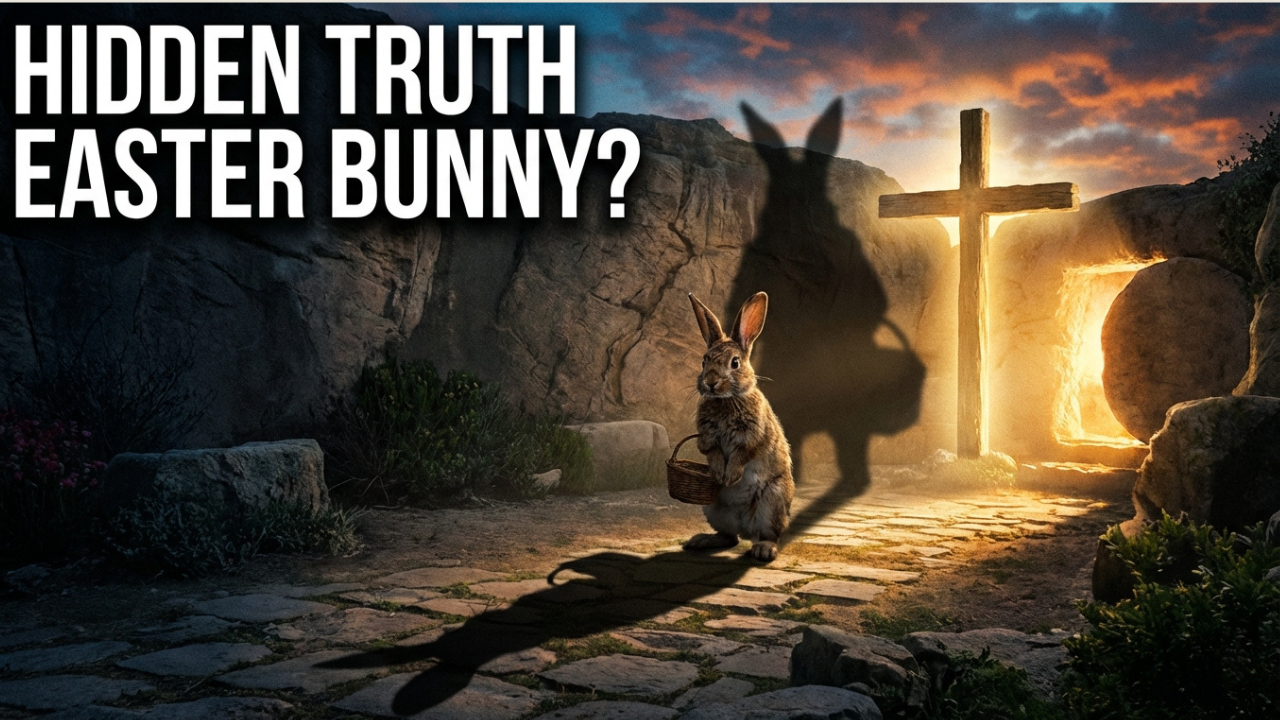
The cross is replaced by a cartoon.
Programming the Next Generation
Children are taught:
A magical bunny rewards behavior
But the Gospel teaches:
Salvation is a gift, not a reward
This leads to:
Works-based thinking
Confusion about grace
Fantasy replacing truth
The Strategy of Distraction
The enemy does not always destroy truth directly.
Sometimes, truth is simply replaced.
Not with something evil-looking… but with something pleasant and widely accepted.
Is the Easter Bunny “Satanic”?
This question requires balance and honesty.
What It Is NOT:
Not a literal demonic being
Not directly created by Satan
What It CAN Become:
A distraction from Christ
A symbol rooted in non-biblical traditions
A replacement of truth with comfort
The Bible says:
“Satan himself transforms himself into an angel of light.” (2 Corinthians 11:14)
Meaning:
Not everything that looks innocent is spiritually neutral.
Is It Sinful to Celebrate It?
The Bible does not mention the Easter Bunny directly, but it gives principles:
Avoid idolatry (Exodus 20:3)
Do not conform to the world (Romans 12:2)
Focus on what is pure and true (Philippians 4:8)
So the real question becomes:
Does this bring you closer to Christ, or distract you from Him?
The Emotional Truth: A Silent Shift
Something powerful and tragic has happened over time.
No one planned it.
But slowly:
Through culture
Through repetition
Through tradition
The resurrection became secondary… The bunny became primary
Many children can explain:
Who is the Easter Bunny?
But cannot explain:
What Jesus did on the cross.
This is not just cultural, it is spiritual.
A Call to Discernment, Not Fear
This is not about fear.
It is about awareness and truth.
God calls His people to discernment, not panic.
Ask yourself:
Does this glorify Jesus Christ?
Does it teach truth or confusion?
Does it draw hearts closer to God?
A Christ-Centered Response
Don’t just remove traditions, replace them with truth.
Practical Steps:
Teach the resurrection deeply
Focus on the empty tomb
Share the Gospel with family
Center celebrations around Christ
You don’t remove darkness, you replace it with light.
Final Thought: What Are You Celebrating?
The Easter Bunny may bring temporary joy…
But Jesus Christ brings eternal life.
So the real question is not:
“Is the Easter Bunny right or wrong?”
The real question is:
“What is truly at the center of your heart this Easter?”
Because where your focus goes… your faith follows.